Address
304 North Cardinal
St. Dorchester Center, MA 02124
Work Hours
Monday to Friday: 7AM - 7PM
Weekend: 10AM - 5PM
Address
304 North Cardinal
St. Dorchester Center, MA 02124
Work Hours
Monday to Friday: 7AM - 7PM
Weekend: 10AM - 5PM
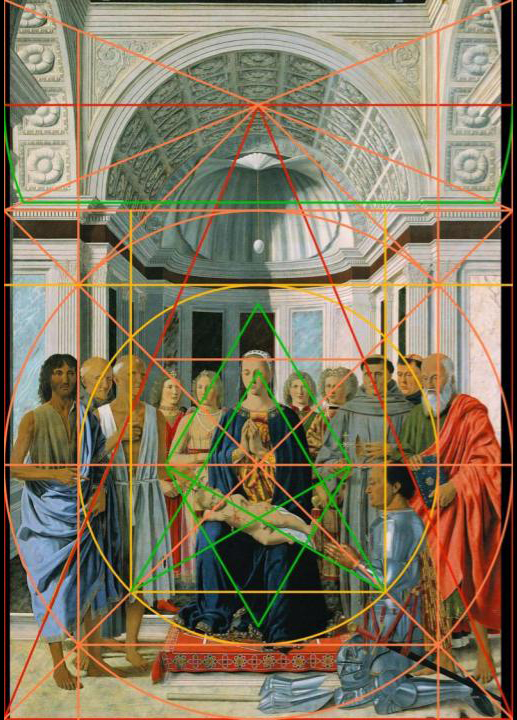
Title: Brera Altarpiece, painted by Piero della Francesca
People often ask what my paintings mean. They expect the shapes or colours to represent something—a landscape, a building, a memory, or an emotion.
I don’t paint to illustrate an idea or a subject. I paint to build a balanced composition.
Many people think abstract painting is simply about arranging shapes, colours, and brushstrokes to create an attractive image. I also arrange shapes and colours, but my first concern is the relationships between them and the visual forces they create.
This idea is not new. Renaissance painters worked in a similar way. They used figures instead of abstract forms, but their objective was to create a balanced composition.
Imagine a painter such as Raphael or Piero della Francesca composing a scene. One figure raises an arm, another turns away, a third looks upward. None of these decisions is made independently. Every gesture changes the balance of the entire composition. A standing figure may counterbalance a group on the opposite side. A bright garment may attract the eye just enough to balance a dark architectural column.
The figures carry the visual forces.
In my paintings, there are no figures, but the forces remain.
A large shape attracts the eye. A smaller dark form can balance it. A curved edge softens the movement created by a long straight line. An open area gives the eye a place to rest before it continues through the composition.
The shapes are not simply the subject of the painting. They are the tools I use to organize these relationships.
That is why each painting develops through a gradual process of refinement. I begin with a few forms and then adjust them continuously. One shape becomes larger. Another moves slightly. A boundary shifts a few centimetres. Sometimes a shape disappears completely because it disrupts the balance of the composition.
I am not looking for symmetry. I am looking for equilibrium.
Equilibrium does not mean that every part is equal. It means that every element of the composition contributes its own visual force while remaining in balance with the others. The arrangement of shapes, colours, and proportions invites the viewer’s eye to travel across the painting while the composition remains stable as a whole.